
The Art Behind Every Stitch: How an Inaash Embroidered Piece Comes to Life
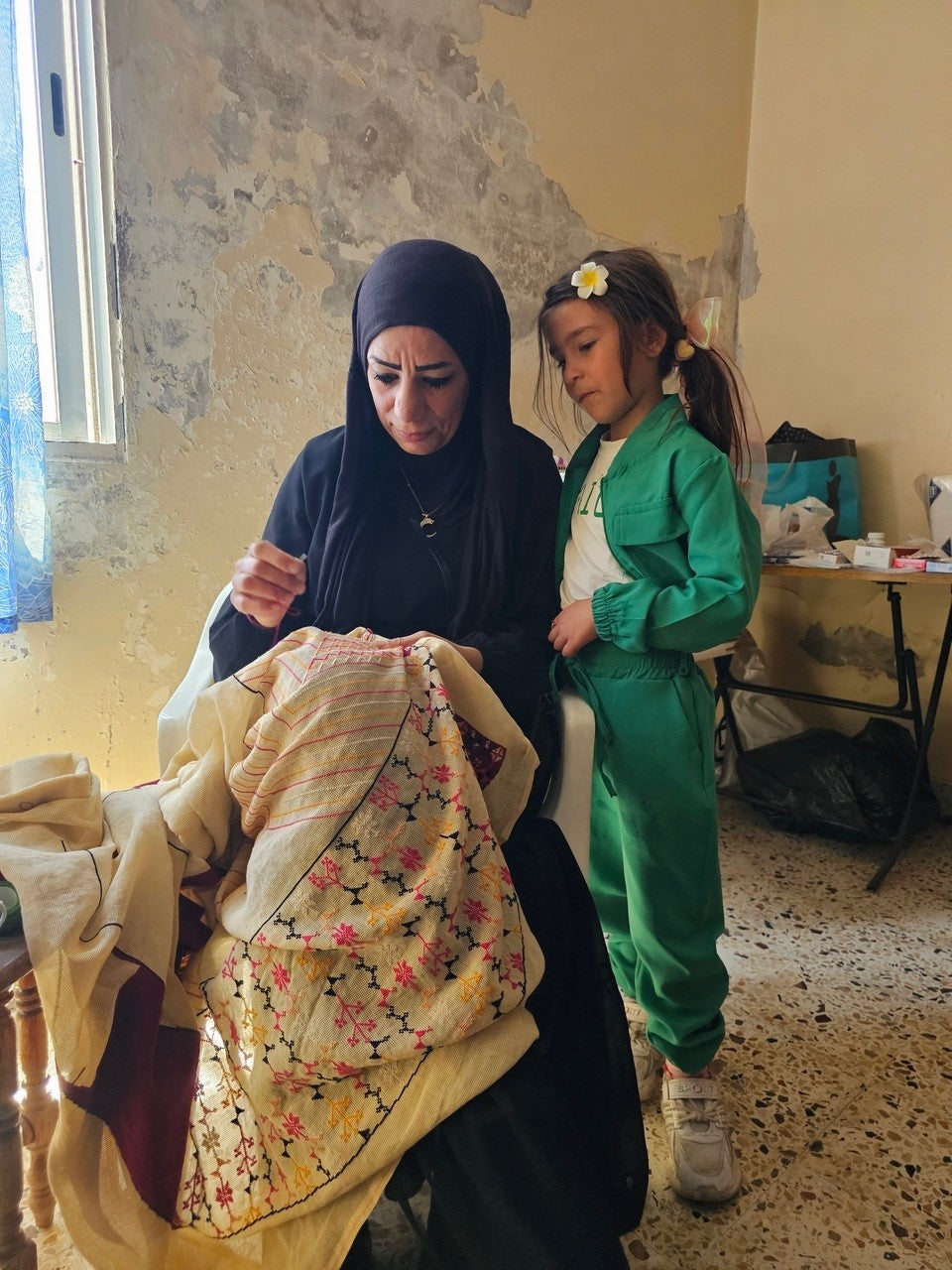
Our hand embroidered items - a dress, clutch bag, cushion – may definitely be eye-catching but what we see at first glance — the colour, the motif, the thread, the beauty of the pattern — is only the final stage in a much longer process.
At Inaash, hand embroidery is not applied as simple decoration. Each application is carefully planned during a design process and production schedule that involves many levels before reaching the finishing stage. From item design to the choice of fabric, from the selection of motifs to be used and how to place them, to the embroidery colour combinations, onto finishing, and quality control, every step matters.
This is why Inaash embroidered items take time. Not only because they are handmade but also because they are made with precision.
The Design Begins Before the First Stitch
Before the embroidery comes design: purpose, style, impact.
Jacket, dress, abaya, shirt, cushion, clutch bag, tote or hat. Whatever the item it must be well designed and tailored with the appropriate fabric. A garment must feel comfortable on the body. A bag must be practical and strong. A cushion must complement an interior. A large textile artwork must be conceived for maximum impact.
Then comes the question of the embroidery.
The notion: where do we stick some embroidery, doesn’t exist. It is always a question of which embroidery most suits the shape, size, fabric, and function of a piece. Which embroidery best suits and enhances each item?
Motifs are chosen to complement the item. The scale must feel right. Its placement must have visual impact. Its colours must complement the fabric. In this way the embroidery becomes integral to the design.
Choosing the Motif and Colours
Palestinian embroidery, also known as tatreez, is a rich visual language of motifs, patterns, colours, and regional references. At Inaash, these elements are treated with great respect by our expert design committee whose knowledge of the symbolism and impact of the motifs brings a vital dimension to the selection process. The significance of their choices may not be apparent or obvious but they are usually suffused with deep meaning, for example in a recent collection based on Ramallah.
Meaning, placement, scale, color and the overall balance of the composition all come under the Design Committee brief. Nor are their choices strictly orthodox. Sometimes, a motif will be used in its traditional form. Other times, it is enlarged or inverted into patterns to give it a more contemporary look, more organic to the feel of the piece. The aim is always to respect the heritage while producing an item that feels refined, wearable or useful and relevant to today.
It is fair to say that Inaash gets many compliments about the quality of its embroidery and the color combinations of threads chosen. A surprising amount of time goes into color selection, and those color combinations are the result of years of experience by the Inaash team. The colors used may be bold and largely uniform for maximum impact like red on natural linen. Other combinations are carefully chosen to complement a fabric. Still others are merged into new and impactful combinations that transform a beloved, classical item like a silk clutch bag into a stunning must-have purchase.
These decisions are not obvious to the beholder but they dictate the entire effect of the finished work.
From Inaash to the Camps
Design approved, colours selected, the next vital stage is to assemble the threads and fabrics to be sent to the Inaash camp supervisors who will meet, brief and distribute the work to our gifted embroiderers. The camp supervisors are vital in helping to coordinate the process, through distribution, monitoring, and quality control.
All of this is central to Inaash’s mission.
Founded in 1969 by Huguette Caland, daughter of former Lebanese President Bechara El Khoury, together with likeminded Palestinian and Lebanese women, Inaash was created to preserve traditional Palestinian embroidery while providing dignified work for Palestinian refugee women in Lebanon.
Today, Inaash works with more than 450 Palestinian women embroiderers. Through its system, the women receive embroidery work, materials, guidance, and follow-up. Over the years Inaash has helped and supported thousands of women, helping by generating an income for them while actively conserving their culture and history.
Embroidery in Process
Once the piece reaches the embroiderer, the intricate work begins.
Most embroiderers learned their craft as young women from their mothers or grandmothers; traditionally it was part of their daily routine. Even today, as they settle down to their work, tracing the design, counting the stitches, keeping track of the placements, building the motif thread by thread, their routine is both instinctive and vigilant. Palestinian hand embroidery requires concentration and discipline. A small mistake can affect the balance of a pattern, especially in geometric motifs or repeated borders.
The embroiderer must keep the stitches strictly aligned, maintain the right thread tension, and make sure the colours are balanced across the design as required. In some pieces, the embroidery traces the cuff of a sleeve, frames a neckline, or richly embosses a chest panel. In others, it forms a dense, uniform cover for larger surfaces such as cushions, tray covers, shawls, runners or wall hangings.
Unlike machine printed designs, hand embroidery is notable for its texture, depth and tangible presence. Individual embroiderers have slight variations in technique not obvious except to the expert eye. The stitches follow the rhythm of the hand that made them. Even the smallest variations are significant, which is why hand embroidery is so precious and distinctive.
Review, Finishing, and Quality Control
Nothing about the embroidery should be rushed. The intricacy of the work and the time it takes are deeply respected.
Once the work is completed, the production process resumes.
The embroidered piece returns to Inaash for review. Quality control kicks in: the embroidery is carefully checked—the colour, the alignment, the finishing of the threads, the balance of the motif.
Those pieces that make up a garment will move onto sewing, lining, hemming, buttons, finishing, labels, or final adjustments. Bags, cushions, or homeware enter the assembly and finishing stages.
Each step is to ensure that the final item is not only beautiful to look at but also well-made, well-finished, ready for use: to be worn, carried, or displayed.
Every Inaash piece passes through this well-conceived chain which gives it a value-added quality.
Why the Process Matters
Understanding the embroidery process helps explain why handcrafted embroidery cannot be compared to mass-produced decoration. Each stage protects the integrity of the final piece.
All of which is geared to keeping tatreez alive and relevant in today’s world.
Since its inception, Inaash has embroidered more than 3,700,000 pieces. Across clothing, accessories, home décor, and large textile artworks, the organisation continues to bring Palestinian tatreez into contemporary living while supporting the women whose hands carry the craft forward.
To look closely at an Inaash piece is to see more than a pattern.
You see design. You see informed decisions. You see the work of expert Palestinian embroiderers. You see a traditional craft adapted for the present without losing its meaning.
Behind every stitch, a whole process — one that begins long before a needle touches the fabric.
