
Exploring Palestinian Embroidery: The Craft of Tatreez
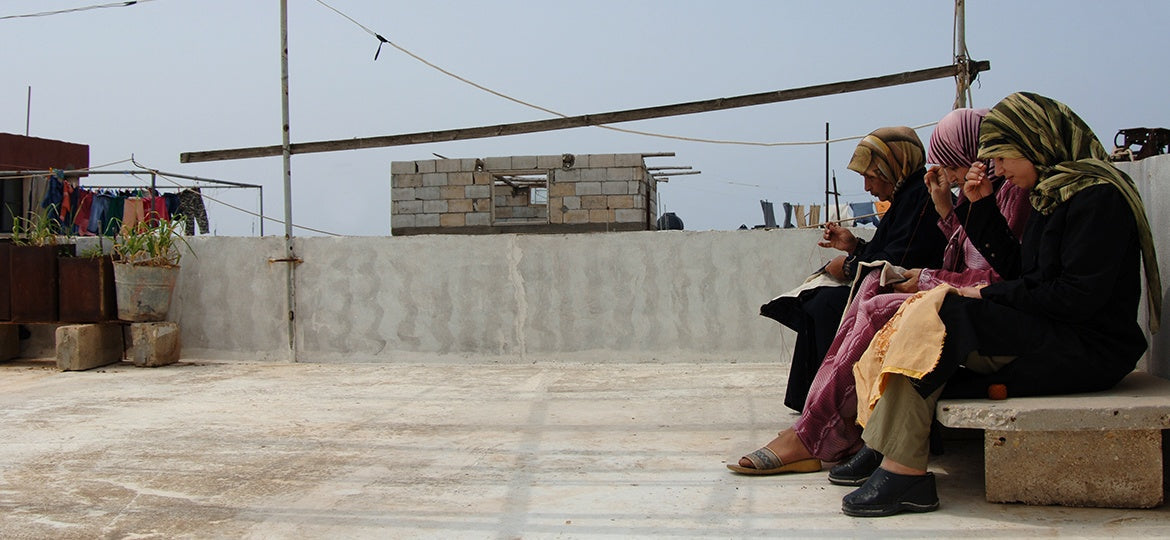
Tatreez, the traditional embroidery of Palestine, is created stitch by stitch using a cross-stitch technique on fabric. This is not merely for decoration. There is a clear structure to it, with each motif placed with clear intention, selected stitches counted into patterns, a skill taught through practice rather than written instruction.
"Tatreez is not something you finish quickly," says Rihab, an Inaash supervisor who works closely with the embroiderers. "Every piece takes time, patience, and a steady hand."
A single panel can take weeks or months to complete, depending on its size and the density of the design. This is slow work, reproduced only with skills carefully built up over years.
Reading the Motifs
Each tatreez motif conveys a specific reference. A cypress tree, the moon, a bird, or a geometric pattern, none are random choices. Historically the patterns stitched onto a woman's dress varied by area and family and were chosen to indicate her village or region.
"When women embroider, they are repeating what they learned from their elders, who in turn were taught the same way, across generations," Rihab explains.
Alongside the patterns and shapes, the colors equally conveyed meaning. Derived from natural dyes available across the different regions, they too indicated specific information about place and origin. Together, these details worked as a code, a form of identity, proudly announced by the clothes of the wearer.
A Skill Passed Between Generations
Historically tatreez was learned by daughters or granddaughters watching their elders at work. From a young age a girl would follow the movement of the hands, the formation of the patterns until she herself was ready to pick up a piece of fabric and start to sew. This is how the craft survived, even as communities were displaced.
For Palestinian refugee women in Lebanon, tatreez was a vital and precious skill that travelled with them, intact, locked in the memory and cherished with their hands.
How Inaash Safeguards and Promotes This Craft
Inaash was established in 1969 to address a specific problem: Palestinian refugee women in Lebanon had limited access to formal employment, or marketable skills. While some still practiced embroidery many had fallen behind in their training, interrupted during displacement. Where the craft existed, the means of marketing it was not available. This is where Inaash stepped in to provide training, materials, and marketing of finished products in order to provide women with an income and a sense of self-respect and independence.
Today, over 430 women across five refugee camps in Lebanon produce embroidery through Inaash. Since its founding, more than 11,000 women have been trained and supported. The priority has stayed the same for over five decades: to provide steady work across a range of products.
The Work Behind Every Piece
Every Inaash product is handcrafted. Each piece is the work of an individual who, often at the end of the day, sits down to quietly create a design using patterns and techniques that have survived decades of war, disruption and displacement.
"You can always spot a hand-stitched piece," Rihab says. "It carries the signature of hand that made it." The greater the embroiderer’s skill the finer the piece. In all cases, precision and artistry are the trademarks of Inaash.
Like all handmade traditional work, what varies from piece to piece is the aptitude and dedication of the woman who made it. It’s a testimony to her identity and her ability.
Why This Matters
Supporting tatreez through Inaash is not primarily about acquiring an embroidered object. It is about sustaining a system where Palestinian women earn income through a skill they already hold, while keeping the practice active and relevant.
"When someone buys an Inaash piece, they are directly supporting a woman's work," Rihab says. "Her income, her skill, and her heritage, all in one piece of cloth."
Inaash's mission has remained consistent since 1969: maximize employment opportunities for Palestinian women through embroidery, and keep this heritage relevant by ensuring it continues to be actively made, worn, and used, rather than simply displayed.
Tatreez survives simply because women continue to sit down and stitch it. That, more than anything else, is the power of the craft.