
The Cushion That Started Inaash
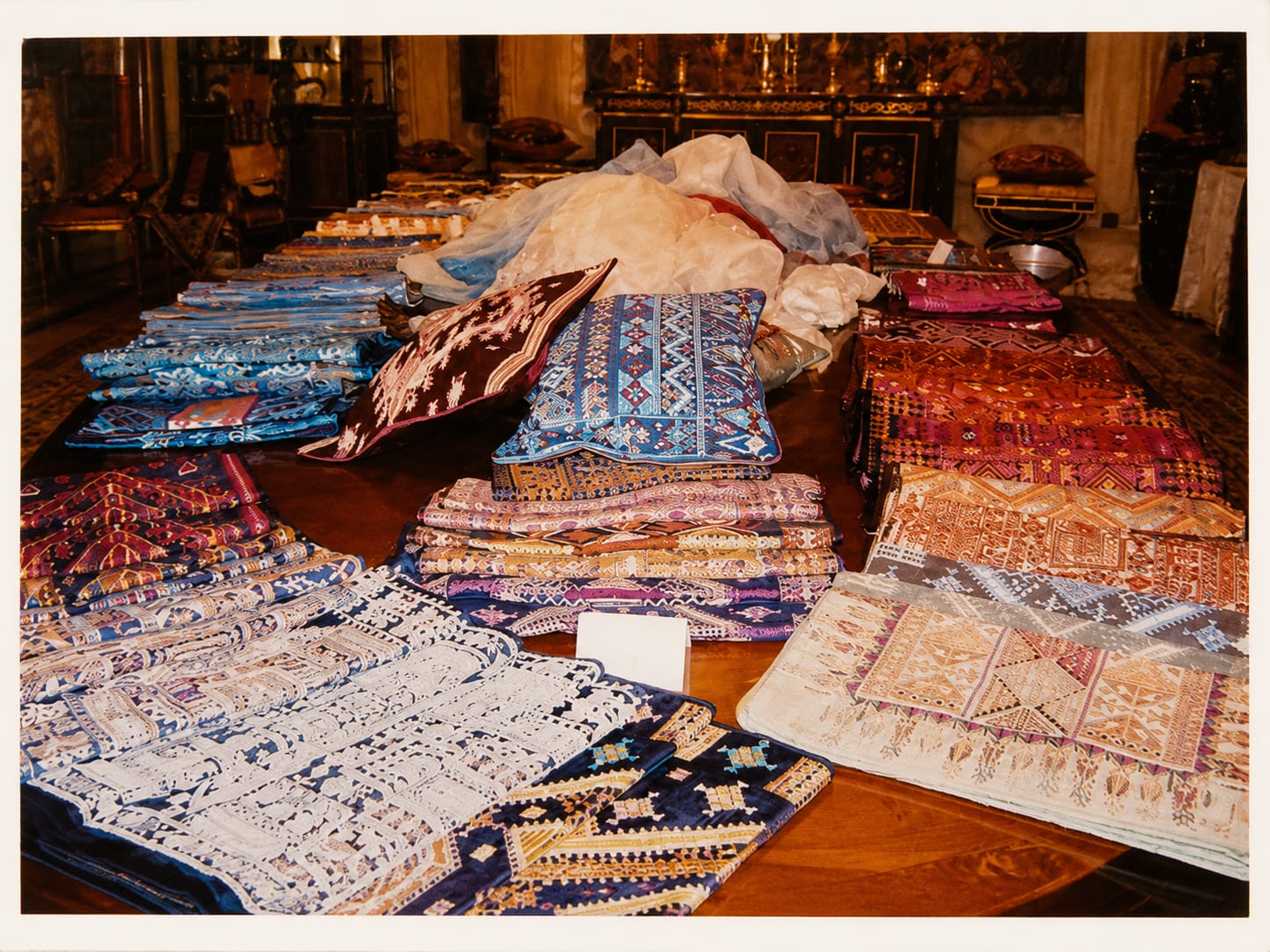
Before Inaash gained a reputation for embroidered garments, accessories, and textile collections, it made its name with one of the most comfy objects in the home: the cushion.
When Inaash was founded in 1969, cushions were selected among the Association’s very first products. According to Inaash matriarch Sima Ghandour, they were chosen for a practical reason. Measuring approximately 45 × 45 centimetres, they offered a manageable surface on which young women could practise and relearn the techniques of Palestinian embroidery.
Working on canvas, the embroiderers could repeat stitches, understand proportion, combine motifs and build confidence without immediately undertaking large or complicated pieces. Each cushion was both a learning exercise and a finished product—something useful, beautiful and achievable.
From delicate floral patterns to symbolic traditional motifs, Inaash embroidered cushions beautifully preserve the visual language of Palestinian culture while adding character to contemporary interiors.
In this way, the cushion was never simply decorative. It also functioned as a quiet method of teaching, where tatreez could be practised, corrected, remembered and ultimately admired.

Designed by the Women Who Shaped Inaash
The early designs and research into Palestinian embroidery motifs were the work of the founders of Inaash, including Huguette Caland, Sima Ghandour, Malak Husseini Abdul Rahim, Jumana Husseini and Fadwa Lababidi Soboh.
Every stitch has a purpose, every motif carries meaning, and every embroidered cushion becomes a treasured reminder of Palestinian heritage and those who preserve it.
The women and the embroiderers worked together on traditional Palestinian stitches, borders and motifs, arranging them within the balanced square format of the cushion. The designs emphasized the visual language of Palestinian embroidery while allowing space for composition, colour and individual interpretation.
Each cushion became a small piece of Palestinian embroidery art—accessible, affordable, rich in symbolism and meaning.
Within the square surface, shapes, motifs, patterns and colors could be arranged and rearranged, repeated in borders or dominating centre in an exciting combination of new arrangements. What began as a practical teaching object gradually developed into one of Inaash’s most recognisable and appreciated forms of textile design.

From Canvas to Lebanese Silk
As the canvas cushions became more established, Inaash began experimenting with other fabrics.
Silk, initially sourced from Thailand, introduced a more luxurious material to the collection. However, it soon became clear that the quality of the Thai silk did not meet its expectations. Lebanese silk proved to be far superior. Its richness in texture and depth of colour provided a refined background for the embroidery, allowing the Palestinian motifs to stand out with greater clarity and elegance.
Through Palestinian embroidery art, traditional patterns become timeless expressions of culture, memory, and identity.
Attention to colour became increasingly important. Inaash eventually reached a point of custom-ordering silk in specially selected shades, to ensure that the fabric and embroidery worked harmoniously as a unified composition.
This was an important evolution. The cushion had progressed from surface for practising stitches to become a carefully considered design object, shaped by the relationship between fabric, colour and hand embroidery.

A New Chapter in Linen
Around the year 2000, linen was introduced into the Inaash cushion collections.
Linen offered a more contemporary feel. Its natural texture felt more organic, subtle, lighter more in keeping with streamlined modern interiors. The softer linen background gave the embroidery a fresh look—rooted in its Palestinian heritage but entirely at home in a contemporary setting.
As they progressed through canvas, silk and linen, the Inaash embroidered cushion collection continued to evolve while never losing the spirit of how they began.

The Product That Helped Inaash Grow
The success of the cushions played an important role in Inaash’s development. They became a core product, and their popularity helped the Association expand into new categories, including garments, accessories and larger textile pieces.
Behind every piece of Palestinian embroidery art is a skilled woman, a cherished tradition, and a story waiting to be told.
Yet the cushions never became secondary. They have remained at the core of Inaash’s identity not only because they represent the story of its earliest work but also in the way they are still, in all their different forms, amongst Inaash’s most popular products. From a learning experience to a best seller, the cushions have become part of Palestinian households across the globe.
Perhaps this is also why customers love them so deeply.
A Small Beginning, Still Relevant Today
More than fifty years later, each Inaash cushion carries the story of those early beginnings. What began as a simple way to practise tatreez became one of Inaash’s most enduring successes—a product that helped teach and support women, preserve Palestinian visual culture and bring it into the intimacy of the home.
Till today the process remains essentially the same: a square of fabric, needles and thread, the rhythm of stitches, the symbolism of the motifs and the belief that heritage survives when it is nurtured and used.
Explore Inaash’s collection of hand-embroidered cushions, where Palestinian embroidery continues to thrive through skill, colour, texture and commitment to art.