
Threads of Identity: How Palestinian Embroidery Binds Generations of Women Together
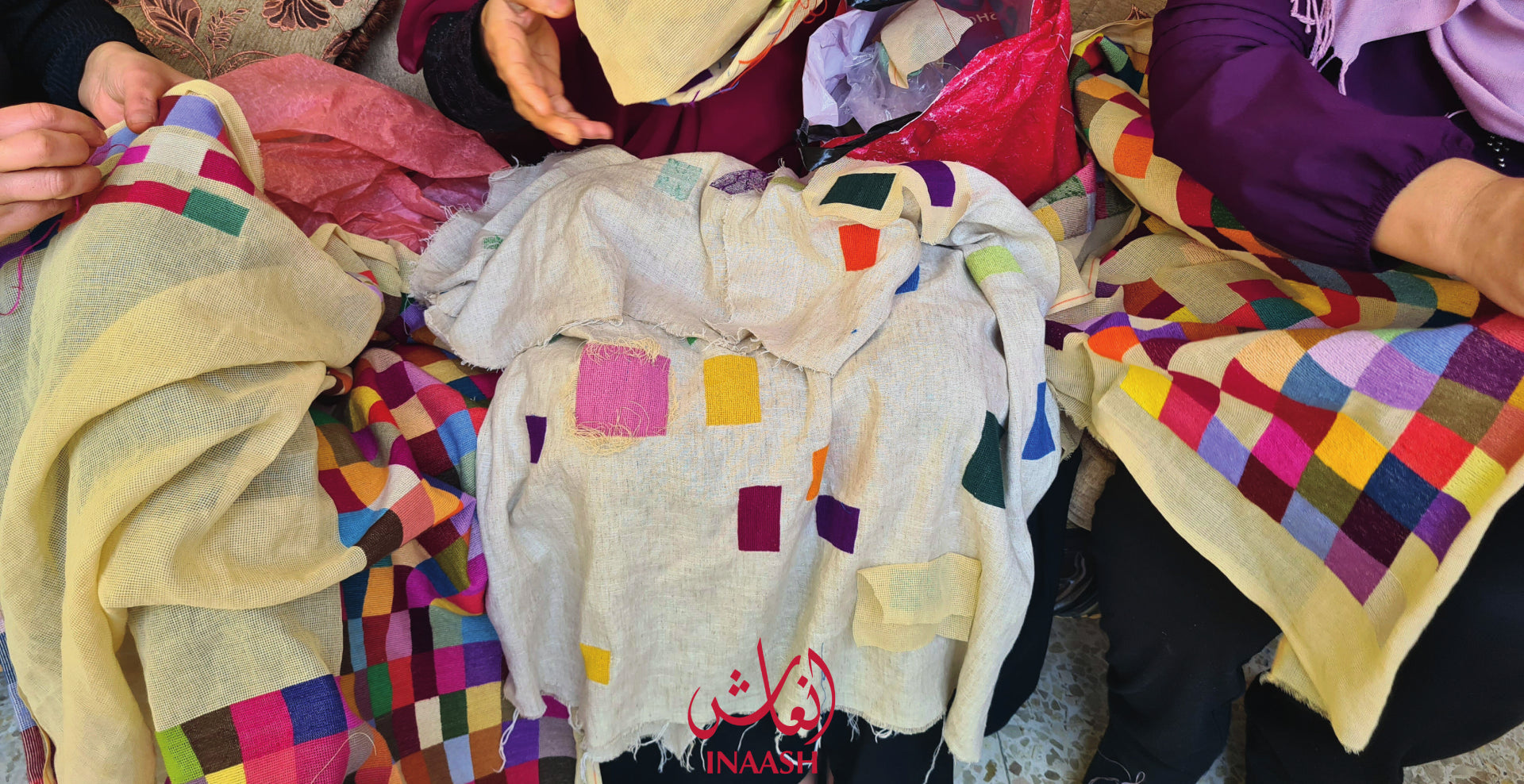
Some traditions are transmitted organically from generation to generation as a matter of course, carrying within them the history and aspirations of a society. They speak of continuity and identity, consistency and resilience. They may be conveyed through stories, rituals or artistic expressions. Palestinian embroidery, known as tatreez, is one such tradition that embodies all of these aspects. Its impressive variety of stitches, motifs and patterns, drawn from the length and breadth of Palestine, represent a vibrant visual culture crafted from the skills and the memories of women who may never have met but who are bound together by the threads of their homeland across generations, borders and countries.
One of our artisans describes how her mother’s quiet dedication to her embroidery awakened her to her own awareness of the power of the tradition: “My mother would sit deep in thought by the window in the afternoon light. The fabric resting gently on her lap, her needle in her hand, surrounded by threads and memories, she worked with calm contemplation”.
“When I was 12, she started teaching me how to sew and what the patterns meant, just as her mother had taught her. In Palestine, we used to gather together sitting in a circle with a basket of threads, talking and stitching, creating the stories of our lives. Don’t think it’s just about making patterns, it’s much more. It’s about our origins, our memories, the stories we share.”
Those stories and traditions have been reproduced across the centuries in the form of motifs and patterns directly inspired by the land and social practices of the different communities across Palestine. Motifs such as the olive branch or the cockerel evolved from rural and village life, while the candelabra and rich gold chest piece couching stitches reflect the great holy cities of Bethlehem and Jerusalem.
As Samira, another embroiderer, puts it, “These aren’t designs; they’re symbols of where we come from.” And thus, embroidery gave rise to a visual language that didn’t need words to be understood.

A Quiet Inheritance
“You don’t need structured rules or formal lessons,” Samira explains. “You just need to follow the hand movements. In the beginning, I would simply hand the threads to my mother while I watched how she sewed, and then one day, she asked me to try sewing myself. That’s how I learned by sitting watching her.”
This informal, generational skills training, which is as much about identity as it is about artistry, is how Palestinian embroidery has survived and thrived, even with displacement and exile. As one embroiderer puts it, “Though I can’t go back to my village, I can stitch it.”
In Lebanon today, and especially in the Palestinian refugee camps, opportunities are limited for women. This is why embroidery has evolved from a traditional skill into a source of income. Thanks to organizations like Inaash, tatreez has become a financial lifeline for over 8,000 women over the last fifty plus years. “This is how we support and educate our children.
Stitching Identity in Every Generation
“Our designs depict stories about our culture.”
From grandmother to daughter to granddaughter the stitches depicting their identity are taught and transmitted to generation after generation. This is how tatreez evolved into a symbol of resistance and belonging. As the women who stitch put it, “It is who we are.”

Threads That Bind
Traditionally and until today, as the evening light fades and day’s work comes to an end, the fabric is carefully folded, and the stitching comes to a natural stop. The steady work of needle and thread, the product of many hours, is put aside for the night. Tomorrow the sewing will begin anew as the design takes shape, not only as a thing of beauty but also as a powerful symbol of identity and continuity perpetuated through skill and commitment.
Through threads that bind, traditions endure.