
Stitching Palestine: How Tatreez Lives On Through Inaash
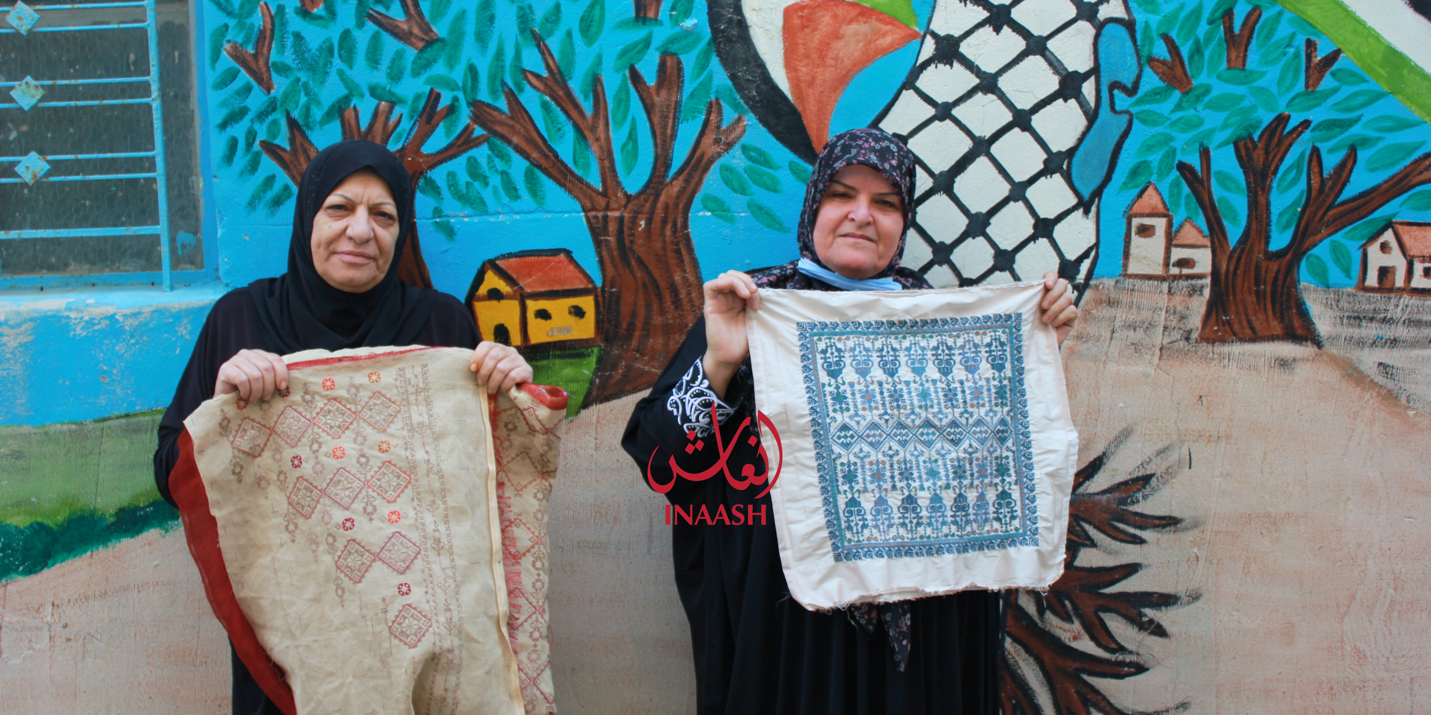
Palestinian embroidery, known as tatreez, is more than a decorative craft. It is a visual language built up by generations of women who used their embroidery – on the clothes they wore - to convey their personal stories, relating to place, family, and local traditions. Their different patterns reflected many aspects of their identity, the landscape they inhabited, their villages, their social status and daily practices. Today, that language remains visible not only in historic textiles, but also in contemporary pieces designed to maintain continuity with the past.
At Inaash, stitching Palestine means keeping this heritage alive and relevant without reducing it to a symbol or souvenir. Tatreez appears across a wide range of our clothing, bags, accessories, home décor, and large-scale art pieces—each designed to give Palestinian embroidery its place in modern life.
The Meaning Behind the Embroidery
Palestinian embroidery requires skill, patience and devotion. It is distinctive in its intricacy and in the complexity of its motifs, patterns and stitches. The motifs have significant symbolic value and are the key to deciphering the ‘story’ on a garment or other items. The use of repeated patterns and specific colors also contributes to how we translate the story of tatreez.
Bringing Embroidery Into New Spaces
Embroidery was the rationale behind the founding of Inaash; as a heritage, a craft, and as a social enterprise designed to generate a vital income for the women who produce it. Working with our skilled artisans our expert design team aspires to bring embroidery into new concepts and spaces across a wide range of products. It is fair to say that how and where we use tatreez informs everything we produce.
Alongside our more classical embroidered pieces, most especially cushions, small and large scale tapestries, our legendary abayas and shawls, Inaash produces contemporary seasonal winter and summer collections, using high quality fabrics for easy to wear styles. While excellent the cutting and tailoring are vital, what is paramount in an Inaash collection is the choice and placement of the embroidery selected from our extensive tatreez archive. Classic motifs like the cypress, date palm, pasha’s tent, and orange blossom are chosen to best enhance each individual garment. This along with the more geometric patterns, and a range of edging or finishing stitches. The same care extends to bags, accessories, home ware, and large art pieces—placing tatreez not only in wardrobes, but in homes and public spaces.
The Skill Behind Every Piece
Stitching Palestine also means recognising the women whose handiwork keeps the craft alive.
Inaash currently employs more than 450 skilled Palestinian embroiderers in refugee camps across Lebanon. Their work provides them with a vital source of income, as well as giving them recognition and a sense of independence. Since its inception, Inaash has encouraged thousands of women to use their skills to provide for their families and keep their heritage alive and relevant. To date more than 3,700,000 pieces of tatreez have been produced—each one reflecting knowledge, dedication, and care.
The scale matters. It reflects not only the strength of the craft, but also the commitment to ensuring that embroidery remains a source of dignity, income, and cultural continuity for Palestinian women.
Each piece is created stitch by stitch, often over the course of several weeks or even months depending on the complexity of the design. This is why choosing an Inaash piece is not a mere purchase, it can mean anything from investing into a collector’s item, to stepping out in style sporting an Inaash summer hat. Whether buying a garment, a bag, a tray, a cushion, a wall hanging or even a key ring, every piece great or small is a work of art shaped by skilled hands that stitch the story of Palestine with love and pride. That is why magic of tatreez endures.
Bold, practical, artistic, traditional, or modern— tatreez navigates the contemporary world while remaining firmly rooted in its heritage.