
How an Embroidered Silk Abaya Is Made: A Story of Time and Skill
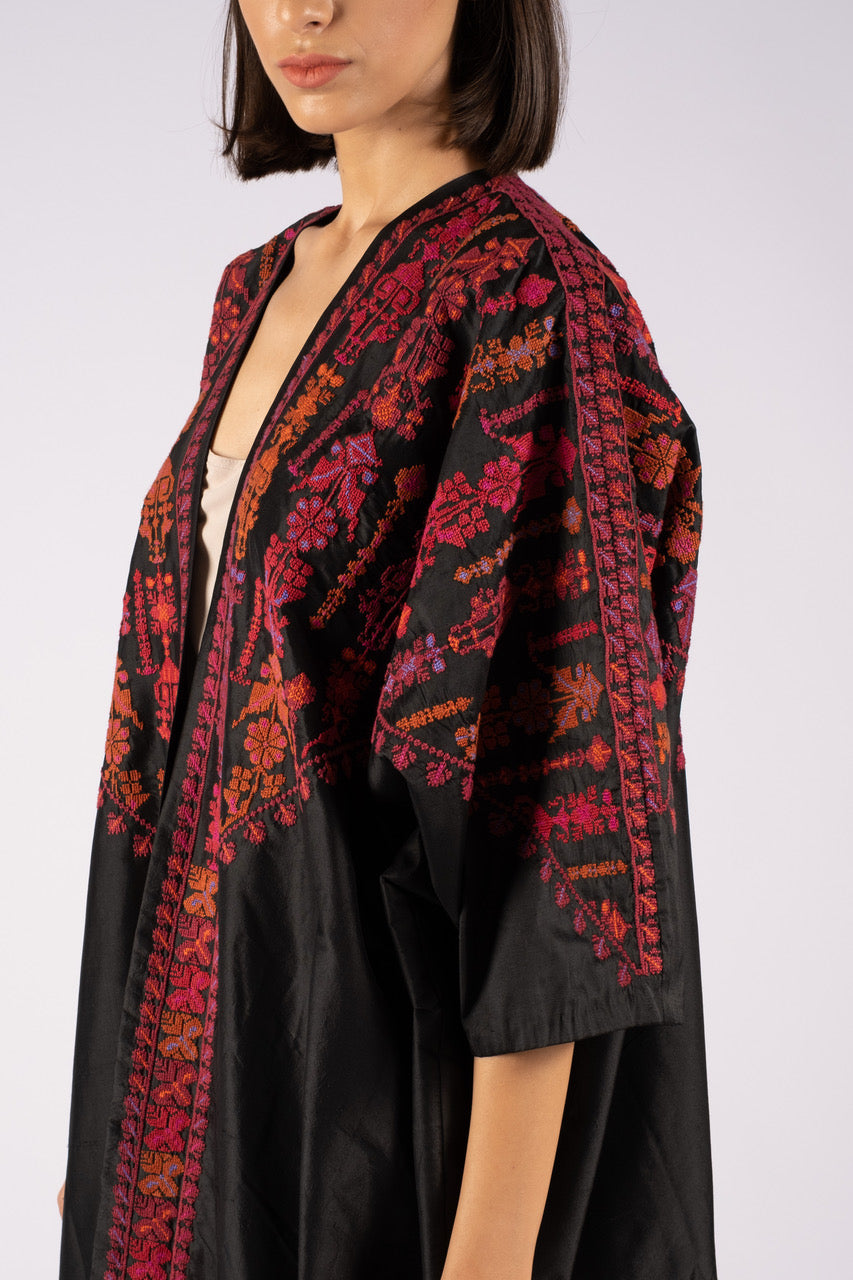
The impact of a silk abaya is both subtle and powerful, understated and yet dynamic. This head- turning garment with its soft folds and intricate cross stitch embroidery, carries within it not just flowing elegance but also the weeks of dedication and care that went into its making. Those who sew these abayas always say, “This is not just a garment, it’s a journey. It’s a journey that is made stitch by stitch, day after day.”
A silk abaya begins with its fabric and all the feelings such rich textiles evoke. For an embroiderer like Aaliya, it starts with a touch. “When I first feel the fabric, I try to imagine the woman who will wear it.” High-quality mulberry silk is chosen for its sheen, strength and ability to support copious intricate embroidery without sagging. According to designers “The silk needs to feel like a second skin that is soft yet confident. The fabric defines how the garment lasts and feels throughout the day. Once you find the right silk, the story starts to unfold”.
Designing the Silk Abaya
After the fabric comes the design – the cut, the motifs used, the placement of the embroidery.
When it comes to the cut, one master tailor explains, “Cutting silk is like holding water in your hands, you must guide it not force it.” From this precision comes the graceful flow of the abaya, the quiet elegance of its structure, and the movement of the sleeves that define its silhouette.
“Every design has a rhythm,” explains Fatima an expert in silk needlework. “If the embroidery is too heavy, the silk loses its voice. On the other hand, if it’s too light, then it feels incomplete.” As silk is delicate, the balance is crucial. The silk fabric is folded with mathematical care and precision to ensure that the patterns are symmetrical. The focus remains on the intricacies of the patterns. Mistakes can be difficult to rectify.
The Heart of the Silk Abaya
After the patterns are agreed and the colors are chosen it takes a skilled artisan like Nisreen around three months of near continuous work complete a silk abaya. “One sleeve can take two weeks because it must be perfect,” she says. Any slight irregularity or tiny variation in the pattern or threads merely reflects the exacting handiwork that goes into transforming the designs into impactful garments.
At Inaash the designers take care to maintain durability without compromising softness. Production expert Samar says, "People buy the abaya for the embroidery, but they care about how the abaya feels when they wear it.” So, meticulous stitching and skilled craftsmanship are both vital for producing a premium item.
Once the sewing is finished and beads or other embellishments are secured, the abaya is expertly pressed for the silk to settle into its final form. Aaliya says, “The final stage is a mark of respect for all the work that came before.”
What a silk abaya means to someone who buys it, we don’t know. It can be the fulfilment of a dream, a mark of celebration, a generous gift. It can create memories or be treasured as a family heirloom. Sana, a buyer, says, “When I wear a silk abaya, I know I’m wearing the hard work of someone. So, it’s not just clothing for me; it’s an emotion.”
Crafted with passion, precision, and patience, the silk abaya is all of these things.

The Silent Story Within Every Silk Abaya
In a world of fast fashion, such beauty takes time. The craftsmanship that goes into each elegant piece has been taught to women by women for generations. Their needle skills and knowledge of embroidery write the silent story behind every silk abaya. It’s a story of heritage, beauty and dedication.
So, the next time, you see a silk abaya, look closer and remember its story.